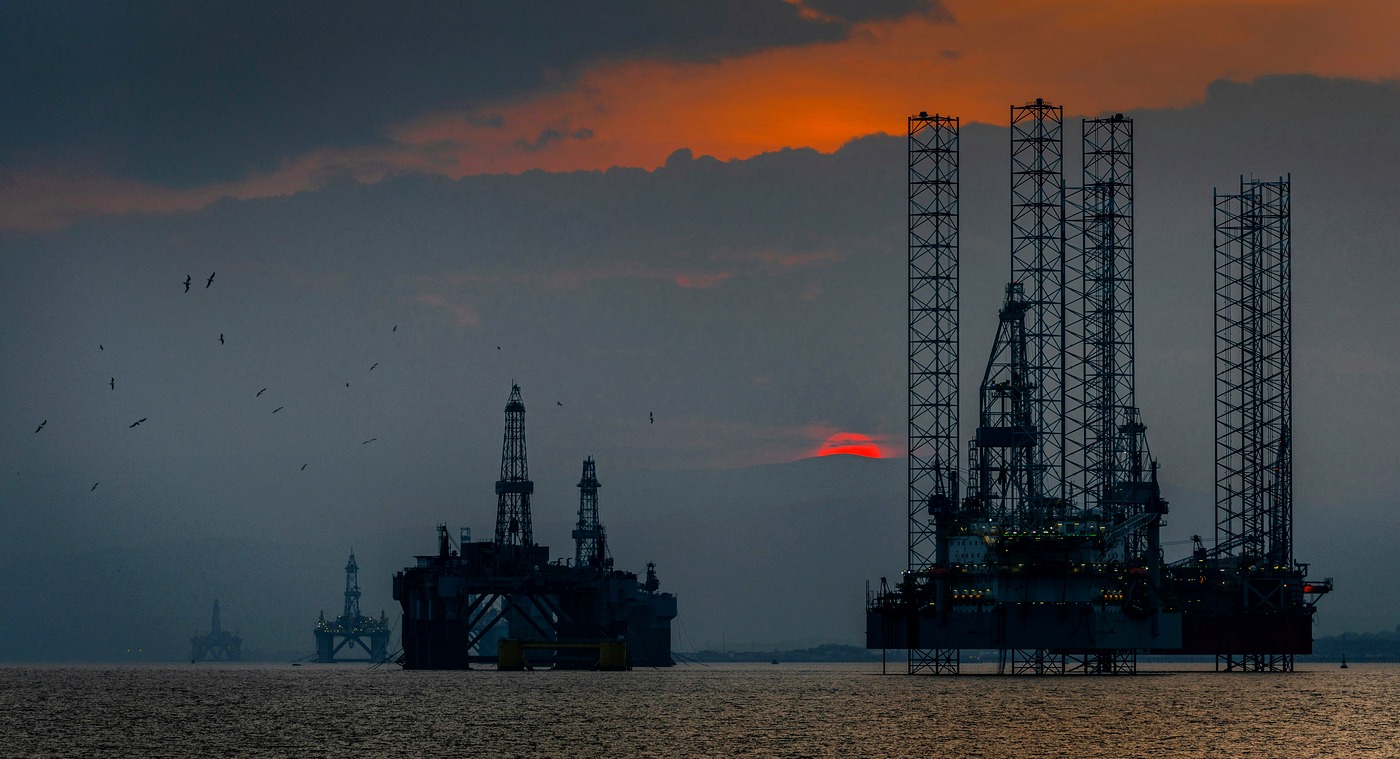
Offshore oil platforms at sunset
PATENTED CTP · 9 COUNTRIES · 500+ WELLS

The oil & gas is already in your reservoir.
We unlock it.

A game-changing, hydrogen-driven well stimulation technology — delivering gains of up to 2,000%, without hydraulic fracturing or special equipment.

Gentle by Design. Powerful by Result.
Safe for the well. Profitable for the field.
Where other technologies fall short — HYDROSTIM gives the well a second life.
30+
YEARS OF R&D
25+
FIELD EXPERIENCE
9
COUNTRIES
500+
WELLS
96%
SUCCESS RATE
2,000%
MAX GAIN
TRUSTED BY OPERATORS & INSTITUTIONS WORLDWIDE
SOCAR Eni Turkmengaz Turkmennebit ONGC IPMash NASU
WHY HYDROSTIM

One Treatment. Total Control. No Compromise.

Conventional stimulation often means one problem, one technology, one intervention.

But decline in well productivity is rarely caused by a single mechanism. Low permeability, formation damage, skin, blocked pore space, fines, heavy hydrocarbon deposits, condensate banking, perforation damage, residual treatment fluids, and the aftereffects of unsuccessful prior interventions, etc., can act simultaneously — restricting flow and limiting the effectiveness of individual treatments.

Addressing these problems separately can mean multiple interventions, specialized equipment, downtime, higher costs and limited treatment scope.

HYDROSTIM takes a fundamentally different approach: comprehensive and individually adapted.

It treats the productive formation as an interconnected system, integrating thermal, chemical, physical and mechanical effects within one precisely controlled, sequential Chemical-Technology Process (CTP).

Every well is unique — so the Chemical-Technology Process is adapted individually every time, to its specific geological, technical and other characteristics, for maximum results.

Each stage is engineered to prepare, enhance and reinforce the next — creating one coordinated stimulation effect instead of a series of isolated interventions.

Safety — by design.
Efficiency — in the result.
Value — in the economics.

HYDROSTIM is engineered for highly controlled, precisely directed impact on the productive formation, preserving well integrity, near-wellbore stability and equipment safety while minimizing environmental impact.

Its integrated action is designed to restore flow capacity, enhance permeability, remove multiple types of formation damage and create new pathways for hydrocarbon flow.

And the ultimate objective is clear:
production and profitability.

One integrated, field-proven treatment instead of multiple less effective separate interventions. Standard workover equipment instead of a specialized fleet. Higher production — compared to conventional methods. Lower operational complexity. Fast payback. An effect capable of lasting years, not months.

Where other technologies fall short —
HYDROSTIM gives the well a second life.
INTEGRATION. CONTROLLABILITY. SAFETY. PROFITABILITY.

INTEGRATION

The simultaneous, integrated action of four mechanisms:
+Thermal+Chemical+Physical+Mechanicaleliminates every cause of productivity decline in a single treatment operation.

CONTROLLABILITY

+Precisely engineered chemical-technological process (CTP)+Targeted formation impact

SAFETY & LOW CARBON FOOTPRINT

+Well integrity — surface and downhole equipment+Formation stability+Environmental care+Minimal CO₂ emissions

PROFITABILITY

+Higher production potential+Fewer interventions+Sustainable economic value

01 · HYDROGEN
Hydrogen Activation, Diffusion & Filtration
Activated H₂ penetrates deep into the pore space of the productive formation, stimulating diffusion and filtration processes and facilitating the penetration of subsequent gas-, vapor- and liquid-phase active agents into low-permeability, hard-to-reach zones.
02 · CHEMICAL
Hot acids, alkali & surfactants — formed in-situ
Including aqua regia and surfactants generated directly in the treatment zone, they provide comprehensive chemical action and help dissolve and remove various types of deposits and clogging agents, including those hard to reach with conventional acid treatment.
03 · THERMAL
100–350°C · controllable
A large release of heat energy intensifies every chemical and physical reaction — while temperature, pressure and composition stay precisely managed at every stage.
04 · MECHANICAL
Pore unlocking
Local pressure rise causes controlled micro-fracturing and new permanent flow drains — the flow gain of a frac, without the frac risk.
THE TREATMENT

Four stages. Standard rig. No proppant.

01 — Screening & modelling

Well history, geophysics and core-laboratory studies under simulated thermobaric conditions define the target zone.

02 — Custom process fluids

Components A and B are formulated for your reservoir chemistry, depth and completion type.

03 — Sequential injection

Pumped with a standard workover rig or coiled tubing. At the bottomhole the reaction releases heat, activated hydrogen and a controlled acid–alkali–acid cycle — while engineered micro-fracturing opens new flow paths, without a single macro-fracture.

100–350 °C

04 — Shut-in & return

The well is shut in for 12–24 hours while a neutraliser stops the reaction and generates natural surfactants that keep the new channels clean. The well is then brought back on production — effect lasts from 12 months to 6+ years.

PAYBACK 1–3 MONTHS
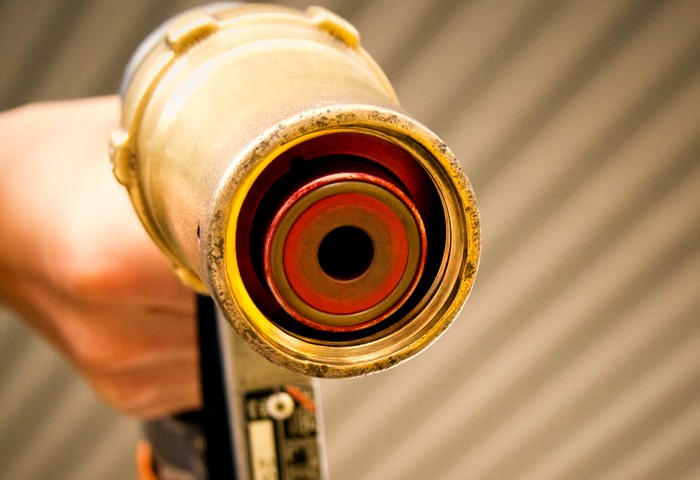
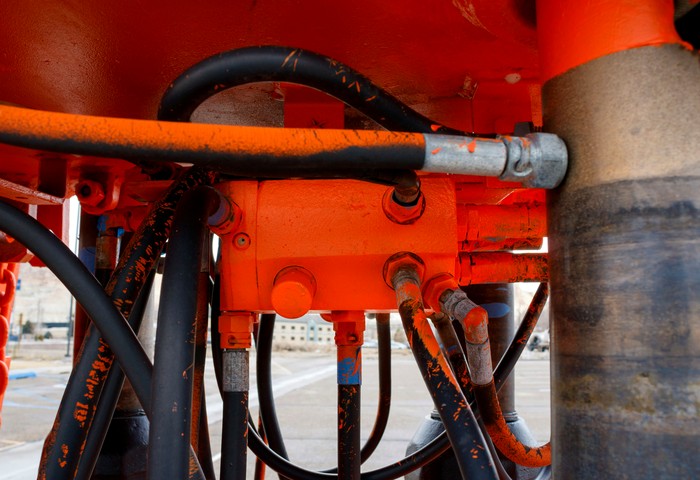
Injection equipment in the field
FIELD-PROVEN EXECUTION

Every stage — standard field equipment, no specialized fleet.

See field results →
SELECTED RESULTS

Proven across 9 countries

UKRAINE · GAS
Well #20 — zero inflow, shut-in
20,000 m³/d
First inflow within 10 hours
RUSSIA · OIL
Well #633 — horizontal
+465%
MFP: 3 months → 4 years
UKRAINE · GAS
Well #119 · Kristische
+1,475%
4,000 → 63,000 m³/day
TURKMENISTAN · GAS
100-well programme
+50–400%
5-year sustained effect
AZERBAIJAN · OIL
13 wells · SOCAR 2023–25
+20–178%
Sand production reduced 50–66%
CHINA · OIL
Well #5854 · CNPC
+436%
2.8 → 15.0 t/day
Field equipment
FIELD OPERATIONS · 9 COUNTRIES · 500+ WELLS

25+ years in the field. Standard equipment only.

Discuss your well →
EOR TECHNOLOGY

HYDROSTIM — enhanced oil recovery & well stimulation

HYDROSTIM is a patented Enhanced Oil Recovery (EOR) and well stimulation technology developed by IPT Company in exclusive partnership with the A.M. Pidgornyi Institute of Power Machines and Systems of the National Academy of Sciences of Ukraine.

What is well stimulation and why it matters

Most wells underperform not because the reservoir is depleted, but because the pathway to it is blocked.

Why operators choose HYDROSTIM

HYDROSTIM combines the reach of hydraulic fracturing with the simplicity of a matrix treatment — without the special fleet, proppant or reservoir-integrity risk.

Applications and reservoir types

  • Well types: oil, gas and gas-condensate; vertical, directional and horizontal completions.
  • Well status: post-drilling completion, underperforming producers, shut-in and abandoned wells, injection wells.
  • Reservoirs: sandstone, carbonate, tight and weakly consolidated formations, from under 1,000 m to over 5,250 m.
  • Objectives: production enhancement, dead-well revival, sand control, post-frac cleanup, longer workover intervals.
CTP · 6 PATENTS · SPE PUBLISHED
Complex hydrogen thermobaric-chemical effect
Developed over 25+ years at IPMash NAS of Ukraine — formerly the USSR leading institute in hydrogen energy research.
PREDICTIVE JOB DESIGN · RISK CONTROL

Predict before you stimulate.

A new technology should not be a leap of faith. Before any work begins, we model the HYDROSTIM treatment for the specific well — based on reservoir and well-construction data — and forecast the expected result. You decide on the basis of calculations, not promises.

MODEL INPUTS
Lithology Depth & completion Reservoir temperature Reservoir pressure Porosity & permeability Damage & colmatation history Fluid properties Production history
01 · SCREENING
Candidate well ranking
Your wells are ranked by expected effect, so the pilot starts with the most promising candidates.
02 · RESERVOIR
Treatment zone & depth forecast
Calculated treatment zone and forecast change in reservoir (flow and storage) properties and permeability of the near-wellbore zone.
03 · ECONOMICS
Production gain & payback forecast
Forecast production gain and payback period — the figures needed for an investment decision.
04 · DESIGN
Well-specific treatment design
Component volumes, sequence and shut-in time engineered for this well — never a template.
YOUR PATH TO A DECISION

Start small. Verify. Then scale.

01 — Free screening

Send data on your candidate wells. We will provide a preliminary assessment and ranking.

FREE OF CHARGE

02 — Forecast & design

For the selected wells — full model, forecast effect and treatment programme, developed and agreed in cooperation with your engineers.

03 — Pilot on a small group of wells

Success criteria (KPIs) are agreed in writing before the job. Standard workover equipment, minimal downtime.

KPIs AGREED UPFRONT

04 — Forecast vs actual

A transparent report compares forecast and real results. You scale up only when the numbers confirm it.

PHYSICS + FIELD DATA

A model built on 25+ years of field experience

Our predictive approach combines modelling of the thermo-baro-chemical process with the results of more than 500 well treatments in 9 countries. The results of every completed treatment are compared with the forecast and used to further refine the model — so each new project rests on an ever wider base of actual field data.

WELL SELECTION · CRITERIA & QUESTIONNAIRE

Universal in scope. Engineered for each well.

HYDROSTIM’s universality is not a one-size-fits-all compromise. It comes from the controllability of the process: the composition and volumes of the process fluids and the operating regimes of the chemical-technology process (CTP) are designed for the lithology, type of damage and specific conditions of each individual well. That is why the treatment remains targeted and reaches deep into the formation in every application — from tight sandstones to carbonates.

The same engineering discipline applies to well selection. Every candidate is checked against criteria built on more than 25 years of field experience. For a pilot we choose wells within the proven envelope, so that a positive result is as predictable as possible; as the programme scales up across the field, the envelope can be widened step by step.

CORRECT NOT POSSIBLE
WHY WELL DESIGN COMES FIRST

The reaction zone must be at the perforations — not above them

Components A and B are placed in the sump and across the perforated interval. Gases and active products naturally rise: if the fluids were placed above the perforations, they would escape up the wellbore instead of entering the formation. A well therefore needs a sufficient sump (reaction zone) below or at the pay zone — or the possibility to clean it out to the required depth.

01 · MUST-HAVE
Well design
  • A sufficient sump (reaction zone) at and below the perforations — or the possibility to clean the bottomhole out to the required depth
  • Sound production casing and cement
  • Adequate perforation of the pay zone
02 · PROVEN ENVELOPE · FOR PILOTS
Reservoir & production
Depth Reservoir pressure & depletion Temperature Permeability & porosity Net pay Water cut Distance to OWC / GOC Oil viscosity ARPD & paraffin content Well profile

Parameter ranges confirmed by our field experience. The exact values are shared with partners under an NDA.

03 · BEYOND THE ENVELOPE
Joint decision

Wells outside the recommended range can also be considered. After additional analysis and modelling we state the estimated risk openly — and decide together whether to proceed.

1
Questionnaire

A detailed technical questionnaire on well design, reservoir, pressures, production history and fluids — provided after signing an NDA.

2
Design check

Can Components A and B be placed correctly? If not, the well is set aside and we look at the next candidate.

3
Fit & potential

Reservoir and production data are compared with the proven envelope; the remaining potential and the risks are assessed.

4
Recommendation
Recommended for the pilot Possible — risk stated, joint decision Not suitable by design

The selection criteria and the well questionnaire are shared after signing a mutual NDA — a first step that confirms the commitment of both sides. Or start with a free preliminary screening based on basic well data.

REQUEST WELL SCREENING

Tell us about your wells.

A few basic parameters are enough for a preliminary assessment. Detailed data can follow later. Your data is treated as confidential.

Opens your email client with the request ready to send.
FAQ

Frequently asked questions

Does HYDROSTIM require hydraulic fracturing equipment?+
No. HYDROSTIM requires only a standard workover rig (WWR) or coiled tubing unit (CTU) — equipment already present at most wellsites. No high-pressure fracturing pumps, proppant or specialised hardware needed.
How long does the treatment effect last?+
The sustained effect typically lasts up to 5 years and beyond. In the most well-documented case (Russia, Well #633), the workover-free period extended from 3 months to 4 years after a single treatment. The Turkmennebit 100-well programme recorded a minimum 5-year effect.
Can HYDROSTIM revive completely shut-in wells with zero production?+
Yes. Ukraine Well #20 had total drilling mud clogging and produced 0 m³/day. Within 10 hours of the treatment, gas inflow was recorded at 20,000–24,000 m³/day. Three wells in the January 2019 dataset were revived from zero to commercial rates.
Is HYDROSTIM safe for the formation and environment?+
Yes. HYDROSTIM produces water-soluble salts that are almost completely neutralised during the final stage. No hazardous by-products remain in the formation. Over 25+ years and 9 countries, not a single environmental incident has been recorded.
What well and reservoir types is HYDROSTIM applicable to?+
Oil, gas and gas condensate wells; vertical, horizontal and directional; terrigenous, carbonate and mixed reservoirs; post-drilling, producing, shut-in and injection wells. Deployed at depths from under 1,000 m to over 5,250 m.
What is the typical payback period?+
Based on field data, typically 1 to 3 months. In January 2019, treatment of 7 wells generated 1,015 tonnes of additional oil — approximately $406,000 in additional revenue at $400/t.
How is each treatment individually designed?+
Every treatment is individually engineered: well state analysis, geophysical modelling, core laboratory studies under simulated thermobaric conditions, custom process fluid formulation, and computer simulation of the CTP for the specific well.
What information is needed to start a candidate assessment?+
Well passport and production history, reservoir pressure / temperature / depth, lithology and porosity/permeability, current well status. We provide a no-obligation preliminary assessment at no cost.
Didn't find your answer?

Our technical team will respond within 48 hours.

Request Assessment →
FREE TECHNICAL ASSESSMENT

Send your well data. Get results, not promises.

We will design the optimal stimulation programme purpose-built for your well, your reservoir and your production targets.

IPT COMPANY
ADDRESS10 Unetskyi lane, Kharkiv, Ukraine, 61066
PARTNERA.M. Pidgornyi Institute, NAS of Ukraine